.png)
Own a next generation medical business in your city.
The gap between medicine and fitness is where Australians are being lost. SANAMethod closed that gap inside a single building in 2023, four years before the rest of the sector started asking government to fund a bridge across it.
Five locations trading, more openings soon. We are now selecting the operators for what comes next.

5 Locations Trading
TAS & QLD, as at [September 2026.]
From $600,000
Total cash investment.
Suits Multiple Owner Scenarios
GP, Fitness Entrepreneur, Intestor
Single Site
Protected territory.
23.9%
of Australians aged 15 and over met the physical activity guidelines in 2022.
Source: Cited by AUSactive, 2026
3 in 1
Australians live with a chronic disease, at a cost of about $98 billion a year. Source: AUSactive, Active Australia Summit, Aug 2026
800,000
avoidable hospitalisations each year from preventable chronic conditions. Source: AUSactive 2026 Pre-Budget Submission
No. 1
Living with overweight or obesity is now Australia's single largest risk factor for disease burden, ahead of tobacco. Combined with physical inactivity, the two account for 8.7% of the nation's total disease burden.
Source: AIHW, Australian Burden of Disease Study, Dec 2024 and 2018

Two industries. One patient. Nobody in the middle.
This is not a marketing observation. It is the structural failure that both industries have now openly named, and it is the reason Australia's chronic disease numbers keep moving in the wrong direction.
What Medicine Can Do
Diagnose. Assess. Prescribe. Monitor. Manage risk with real clinical oversight.
What it cannot do: stand next to someone three times a week for a year and make sure they actually turn up. A GP can tell a patient to move more. There is almost nowhere to send them that is safe, supervised and accountable back to the clinic.
What Fitness Can Do
Coach. Motivate. Build strength. Create the room people come back to. Change behaviour at close range.
What it cannot do: assess anyone clinically, order bloods or manage the medical side of a person's health. Australia has more than 8,000 facilities and almost none of them have a doctor in the building.
23.9%
of Australians aged 15 and over met the physical activity guidelines in 2022.
Source: Cited by AUSactive, 2026
3 in 1
Australians live with a chronic disease, at a cost of about $98 billion a year. Source: AUSactive, Active Australia Summit, Aug 2026
800,000
avoidable hospitalisations each year from preventable chronic conditions. Source: AUSactive 2026 Pre-Budget Submission
No. 1
Living with overweight or obesity is now Australia's single largest risk factor for disease burden, ahead of tobacco. Combined with physical inactivity, the two account for 8.7% of the nation's total disease burden.
Source: AIHW, Australian Burden of Disease Study, Dec 2024 and 2018
People are not failing. They are falling between two industries that were never built to talk to each other. Close that gap in one building and you are not running a clinic or a gym. You are running the thing that was missing.
The intervention required is smaller than most people assume. AIHW modelling found that if Australians at risk added just one hour of moderate activity a week and held it to 2030, the disease burden attributable to physical inactivity would fall by 16 per cent. One hour. The problem has never been the dose. It has been that nobody owns the handover. Source line: AIHW, Reducing the burden due to overweight (including obesity) and physical inactivity.
We did not predict this shift. We just started early.
In August 2026 Australia's peak fitness body proposed a national referral model to formally connect the health system to structured exercise. Here is what the four years before that looked like from inside SANAMethod.
AUG
2022
A GP says the quiet part out loud Dr Richard Ralph, twenty years in general practice, tells Dan Lowry he spends his days giving people advice he has nowhere to send them to act on. His conclusion: general practice needs to have its own gym.
FEB
2023
Our first location opens, Medical consulting first, while the training floor is still being fitted out. Both founders are still running other businesses. The service is designed in front of the first real patients rather than in a boardroom.
2023 – 2025
The model is built, then repeated in Hobart at New Town and then Rosny Park follows. The assessment pathway, the coaching curriculum, the member journey and the doctor induction are documented so they can be taught, not just performed.
2025 – 2026
The model travels to Queensland, opening in Maroochydore, then Cleveland (Brisbane). The first evidence that the model works outside the city it was invented in, run by operators who did not build it.
11 AUG 2026
The sector formally proposes the bridge. AUSactive launches a whitepaper, From Clinical Advice to Community Action, proposing a national referral model: clinicians refer, accredited exercise professionals deliver, outcomes report back to the clinic. CEO Ken Griffin: "We already have the facilities and skilled workforce. This model is about building the bridge between clinical advice and safe, supported action."
TODAY
SANAMethod does not need a referral pathway. The doctor and the coaching floor are already the same business, in the same building, working on the same person. What the sector is asking government to fund across 8,000 separate facilities, this model already does under one roof.
"General practice needs to have its own gym. We need to reimagine general practice so the doctor giving that well-intentioned advice has a better pathway to send the patient down."
— Dr Richard Ralph, Co-Founder, 2022
"This model is about building the bridge between clinical advice and safe, supported action."
— Ken Griffin, CEO of AUSactive, August 2026
Two people, four years apart, describing the same missing thing. One of them had already built it.

Three things that only work together.
Most weight loss services do one of these well. Medicine without coaching. Coaching without medicine. An app or telehealth with no room to walk into. SANAMethod does all three in the same building, for the same member, at the same time.
01
GP-led medical care A doctor assesses every member and manages their care. Real consults, real bloods, real clinical oversight. Not a questionnaire and a courier.
02
In-clinic strength coaching This is the part the sector keeps calling the missing link, and it is the part that is hardest to deliver at a distance. Members are coached in person, by name, on a structured strength programme. Strength work is not an add-on to the medical side of the model, it is designed in alongside it, because closing a person's movement deficit is what turns a plan into a change. Attendance is the outcome that predicts every other outcome, and attendance only happens when somebody is expecting you
03
Nutrition and lifestyle coaching A consult is a moment. The other 27 days of the month are where it is won or lost. Nutrition and lifestyle coaching is the wraparound that carries a member from one appointment to the next: practical education, regular contact, and someone in their corner who knows what was agreed in the consulting room. It is the difference between a member being told what to do and a member actually doing it.
Built for the people already standing at the edge of the gap.
If you work in medicine or in fitness, you have almost certainly noticed this gap yourself. You have probably just never had a way to stand on both sides of it.
DOOR ONE
You are a GP.
Nearly seven in ten of your colleagues report burnout. One in three intends to stop practising inside five years. The complaints are consistent: the hours, the administration, the unfunded time, and an appointment that is not long enough to do the work properly.
Our Co-Founder Dr Richard Ralph was one of them. When we designed the first clinic he was specific about what was wrong. Partly the volume to get through inside a short appointment. Partly the room itself: fluorescent light, no natural sun, a space that feels like a hospital corridor.
So we built the opposite. Natural light, proper furnishings, thirty-minute consults and a narrower scope of practice.
If you would rather own the practice than work inside someone else's, and you want the time and the team to do the job the way you were trained to, this is the model built for that.
DOOR TWO
You are a fitness or health entrepreneur.
You already know how to fill a room, coach a floor and hold a team together. You have also watched people train hard, eat properly and still not get where they wanted to go, and you have known for years that the missing piece sat on the medical side of a wall you could not get through.
And you are fighting for the same customer as everybody else. A 24-hour operator underneath you on price with nobody on the floor. A boutique studio beside you on experience. A franchise chain down the road with the same equipment and the same offer. Every one of you competing on the same promise, to the same people, in a market that is shrinking: Australian gym and fitness business numbers fell from 7,595 to 6,583 in a single year. That is not a marketing problem you can out-post. It is a category with too many operators and nothing left to differentiate on.
SANAMethod is not a bigger gym. It is a different category. A clinical layer that takes years and a doctor to build, a service almost nobody else in your market is offering, and a reason to be chosen that has nothing to do with price, equipment, or being open at 5am.
Everything you already know about coaching, culture, retention and running a floor transfers directly. You are not starting again. You are taking the experience you already have and putting it somewhere the operator down the road cannot follow.
Also a natural fit for dietitians, nutritionists and allied health operators who have run a service business with staff.

Why people do this. Three reasons, and we will only talk openly about two.
01
The work means something.
You get to be the answer to a problem that two entire industries have been passing back and forth for thirty years. Members walk into your building because everything else they tried did not have a doctor and a coach in the same room.
02
A career you would actually choose again.
For doctors, the practice you would have designed. For fitness operators, the ceiling lifted off the work you already do. In both cases you own it, rather than renting your time to someone else's version of it.
03
The commercial question.
You are also weighing whether the numbers stack up, and you should be. We are not permitted to answer that on a website, and you should be sceptical of any franchisor who tries. We model four scenarios, conservative case first, and walk you through all of them before you sign anything.
Two hard industries. One blueprint that makes them work as one business.
Medicine and fitness are each difficult on their own. Medicine brings clinical governance, doctor recruitment, patient records, indemnity, and advertising law that will bite you for a sentence in the wrong order. Fitness brings floor culture, coaching quality, retention, rosters and a customer who votes with their feet every week. Almost nobody has run both. Fewer still have made them behave as a single business, with one member journey, one team and one set of numbers.
That is what the blueprint is. Four years of working out where the two sides collide, and then documenting every one of those joins so the next operator never has to discover them. We are not selling you an idea. We are selling you the four years between the idea and the [FIFTH] location.
GP recruitment.
We source, brief and onboard the doctor. The single biggest blocker to opening, handled before you sign a lease.
Training and launch.
Structured onboarding for you and your team, including a nine-part induction sequence for incoming doctors, plus a launch programme for your first members.
Clinical model and IP.
The assessment pathway, the coaching curriculum and the member journey, documented and trainable.
Ongoing support.
Operating rhythms, reporting, and people who have already made the mistakes you are about to make.
Marketing, run from head office.
You do not run the ads. We do. Campaigns, creative, budget and optimisation are managed centrally for your territory by the team that does it every week for the whole network, inside the advertising compliance framework that keeps it legal. Your job is the leads that land, not the platform they came from.
Brand.
A name, a look and a positioning already understood in market, not one you have to invent and defend.
Software and CRM.
The full stack, configured for your site, carried by the franchisor and passed through at cost.
Founder access.
The founders are still in the clinics. You get them, not an account manager reading a script.
You are buying a system. You are also buying us.
Franchisees buy founders as much as they buy businesses. Here is more than a job title.

Co-Founder & CEO
Daniel Lowry
Twenty years in fitness before SANAMethod, and the operator half of the partnership. Army physical training instructor, then personal trainer on the floor in Sydney, then a management role in global fitness operations leading a team of twenty. He went on to found and build his own high end fitness business in Hobart, took on investment, and sold it in 2025.
What matters to a franchisee is what he has built since.
-
He built this company. From one Sandy Bay clinic in 2023 to [FIVE] locations trading across two states, then out of company ownership into a franchise network. The member journey, the operating rhythms, the reporting and the role-by-role induction every SANAMethod hire completes all exist because he wrote them.
-
He oversees the network's advertising. A full day every week sits inside the ad accounts and the funnel underneath them: reading the previous week's data, scaling what works, cutting what does not. Lead generation is not delegated to an agency and handed to you as a problem. It is run centrally, by the CEO, for every territory in the network.
-
Head office carries the load, not your site. Marketing, reporting, doctor recruitment and advertising compliance are all held centrally and deliberately. They are the four things most likely to sink a single-site owner, and they are the four things you are not asked to build, staff or pay for on your own.
-
He coaches the operators himself. This is the part of the job he is best at and the part he refuses to hand over. Every franchisee gets structured mentoring rather than an account manager: the right questions asked directly, the operator's own answers, and the growth and funnel data sitting open next to them. It means a problem gets found in a conversation in week three, not in a result at the end of the quarter. It also means the person teaching you how to run the model is the person who designed it.
Dan handles every franchise conversation personally, from the first call onward.
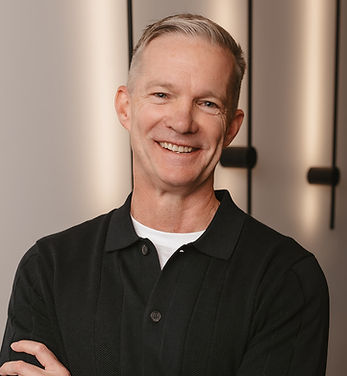
Co-Founder & Chief Medical Officer
Dr Richard Ralph
Twenty years in medicine, and a multi-site healthcare operator long before SANAMethod. He owned General Practice Plus, a group of [SIX] general practices, which he built and later sold. He has already done what a SANAMethod franchisee is setting out to do: run more than one clinic, at standard, at the same time.
Inside SANAMethod he owns the model of care, the clinical governance and the standard every doctor is held to, including the structured induction sequence each incoming clinician completes before seeing a patient.
He is also the reason the doctor problem is solved. He designed the consulting environment and the scope of practice specifically to attract clinicians out of a system that is burning them out, then proved it worked by filling roles from a single post in a doctors' forum. When your site needs a GP, that is the process behind it.
He bought the Sandy Bay building and brought Dan the idea in 2022, after years of watching patients leave his consulting room with good advice and nowhere to take it. He had been a member at Dan's gym for years before he was a business partner, which is how the two of them met.

Director of Client Coaching
Alana Lowry
Built the coaching side of the model. Has founded multiple businesses. Trains every incoming franchise team personally.
_edited.jpg)
Property Director
Steve Chau
Property, IT and health background. Runs site selection, so you are not guessing on the single decision that is hardest to undo.
"We each came in with hard-won experience from our own industry, and just as importantly, we each came in with a list of what we would never do again. People without that combined experience make a lot more mistakes. That was a real advantage for us."
— Daniel Lowry, Co-Founder & CEO

The numbers we can publish, published.
The fee structure is straightforward, so we put it here rather than making you ask for it. The full financial picture, including our modelled scenarios, sits inside the disclosure process.
Initial Franchise Fee
One-off, payable on signing. Covers territory rights, training and launch support.
$85,000
Total Cash Investment
Range depends on site, fit-out scope and equipment finance. Includes fit-out, equipment, launch and a working capital reserve.
$472,000 – $872,000
Ongoing Royalty
Percentage of total revenue. Covers brand, IP, GP recruitment, marketing systems, training and support.
10%
CRM Levy
Always shown as a separate line. An at-cost pass-through for software the franchisor carries on your behalf.
0.5%
On the financials. We do not publish earnings figures on a website, and we would be sceptical of any franchisor who does. What we do instead: we model four scenarios, from extra conservative through to strong, and we walk you through all four before you sign anything. Earnings vary between franchises. We recommend you obtain independent legal, accounting and business advice.
This suits some people and not others.
We would rather lose you here than six months into a process. Read both columns properly.
A GOOD FIT
-
You have a genuine passion for health & wellness
-
You have or can access the full investment plus working capital
-
You come from medicine, fitness or allied health, or you have run a service business with staff
-
You are coachable and will run the model as it is written
-
You care about the health outcome, not only the return
NOT A FIT
-
You are funding it on the assumption of a fast return
-
You want to change the clinical model to suit your own ideas
-
You want a franchisor who will tell you what you want to hear

What happens next. Six steps. You can stop at any of them.
01
You book a discovery call.
We send the ACCC Information Statement first, then the information pack, within 7 days.
04
The financial review.
We walk you through all four modelled scenarios, starting with the most conservative. Bring your accountant.
02
A qualification call with Dan.
Thirty minutes, with the CEO, not a salesperson. We work out together whether the territory, the capital and the operator profile line up.
05
Disclosure and independent advice.
You receive the disclosure document, the franchise agreement in the form it will be executed, and the Franchising Code, at least 14 days before signing.
03
A day in a working clinic.
You spend a morning inside a live site. You see the consults, the training floor and the team. Ask anyone anything – the step that decides it.
06
Signing, site and build.
Site selection, fit-out, GP recruitment, training and launch. You are not doing any of it alone.
The awkward questions answered properly.
We would rather lose you here than six months into a process. Read both columns properly.
Do I need to be a doctor?
-
No. Roughly half the people we talk to come from medicine and half from fitness, health or allied health. Having run a service business with staff helps. Being coachable matters more than either. We recruit the doctor for you.
I am a GP. Do I still practise, or do I run the business?
-
That is your call and it is worth deciding early. Some owners consult inside their own clinic. Others recruit the clinical team and run the business. Both work. What does not work is trying to do both at full capacity through the launch year.
What is the hardest part?
-
The first twelve months. You are building a member base from nothing in a new market while learning a clinical model. It is demanding and it is not quick. Anyone telling you otherwise is selling.
Can I run this from a distance and hire a manager?
-
Yes, investor owned under management is one of the suitable ownership models.
Why is the royalty ten per cent?
-
Because of what it carries: the brand, the clinical IP, GP recruitment, the marketing system, training and ongoing support. The CRM levy sits separately at half a per cent and is passed through at cost. We are happy to walk you through the arithmetic.
Is my territory protected?
-
Yes. Territory arrangements are set out in the franchise agreement and the disclosure document, which you receive at least fourteen days before signing.
Can you guarantee it will work?
-
No. There is a greater than zero per cent chance it does not. There are no guarantees in business and you should be wary of anyone who offers you one.
How much will I make?
-
We will not answer that on a website, and we would be sceptical of a franchisor who did. We model four scenarios and walk you through all of them, conservative first, before you sign anything. Earnings vary between franchises and we cannot estimate earnings for a particular franchise.
What if I get to the end and decide it is not for me?
-
Then we have both done our job. There is no cost and no obligation until you sign, you get a fourteen day consideration period before signing, and a fourteen day cooling off period afterwards.
Somebody is going to open SANAMethod in your city.
One operator per territory. Once a territory is taken it is off the map.
-
Tasmania, Sandy Bay — Trading
-
Tasmania, Rosny Park — Trading
-
Tasmania, New Town — Trading
-
Queensland, Cleveland — Trading
-
Queensland, Maroochydore — Trading
-
Tasmania, Launceston — Opening soon
-
Victoria, Cheltenham — Opening soon
-
Everywhere else — Available
No cost, no obligation, and a straight conversation with the CEO about whether this is right for you.
Important information. This page is general information about the SANAMethod franchise opportunity. It is not an offer to enter into a franchise agreement and it does not contain earnings information. Earnings vary between franchises and SANAMethod cannot estimate earnings for a particular franchise.
Independent advice. We recommend that any prospective franchisee obtain independent legal, accounting and business advice before entering into a franchise agreement.
Disclosure. Prospective franchisees will receive the ACCC Information Statement, and will be given a disclosure document, the franchise agreement in the form in which it is to be executed, and a copy of the Franchising Code of Conduct, at least 14 days before entering into any franchise agreement. A 14 day cooling off period applies after signing.
Investment figures shown are indicative ranges as at [DATE] and vary by site, fit-out scope and equipment finance arrangements. Third-party research cited on this page is attributed to its source and date and is not a representation by SANAMethod. Franchisor: [LEGAL ENTITY NAME], ABN [ABN].